Observations and thoughts
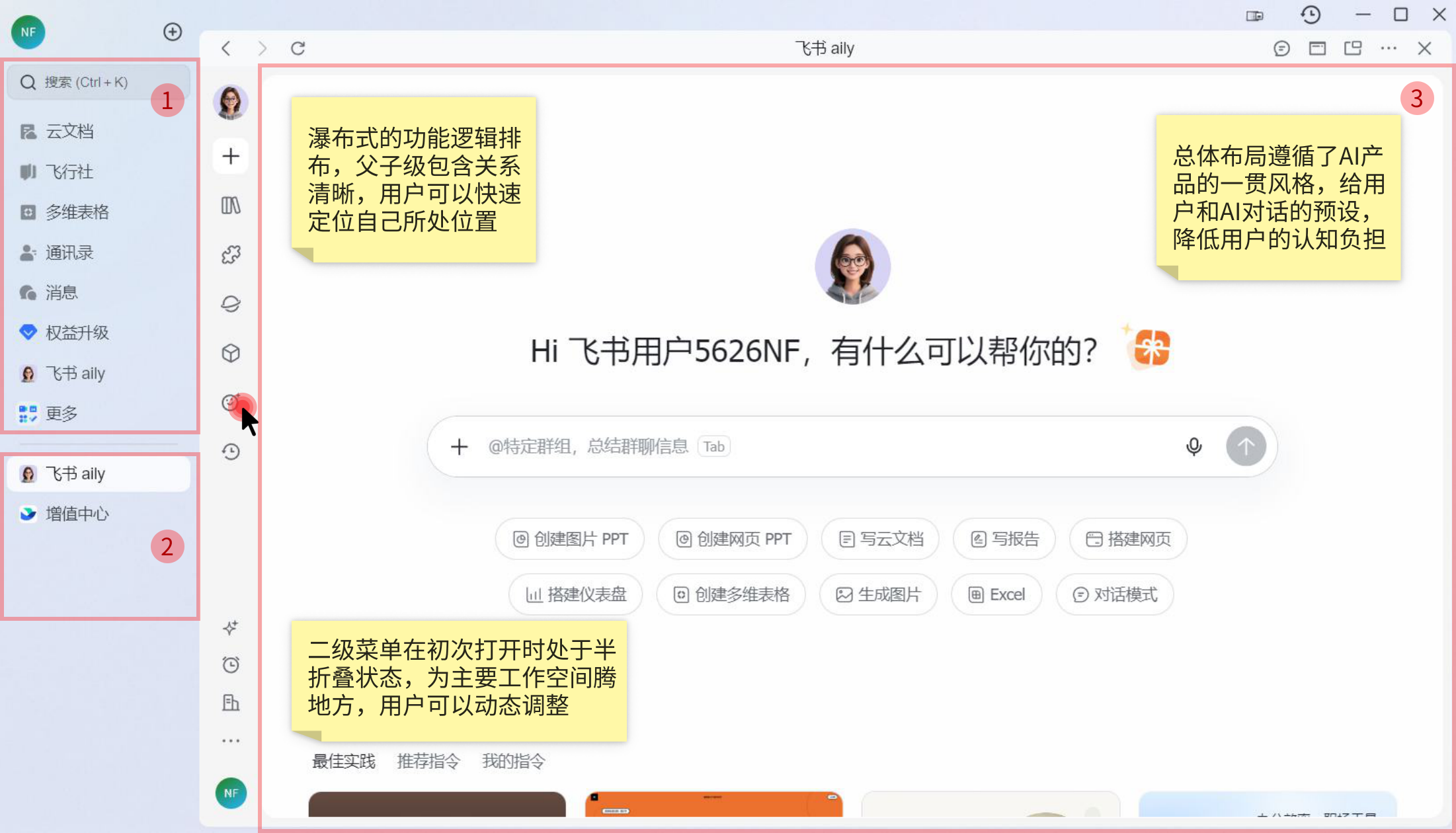
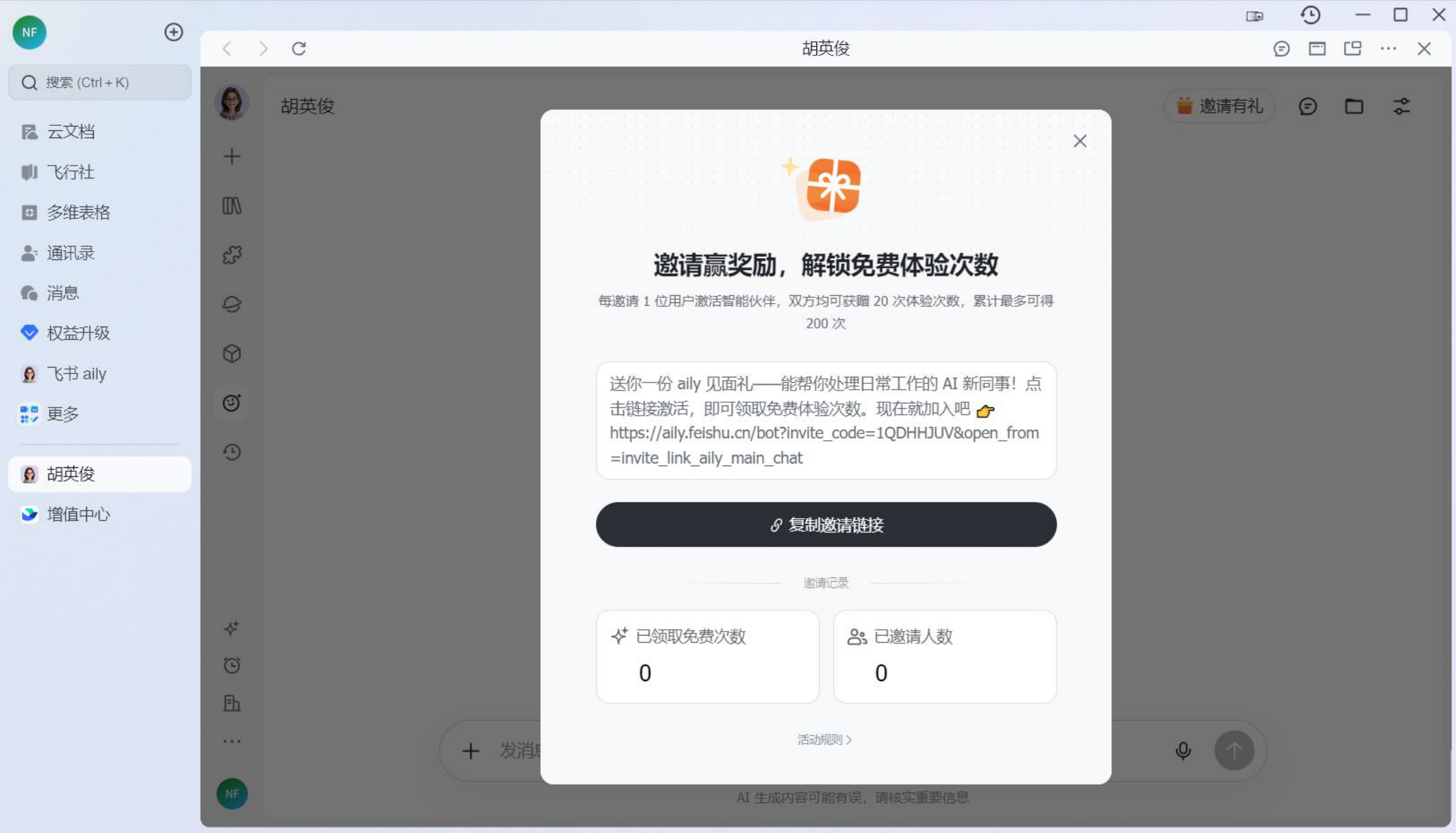
From Feishu Aily and DingTalk Wukong to Salesforce's Dreamforce push around Agentforce and Slack as a collaboration entry, office AI competition is no longer just about implementing a single feature. It is a contest over who can become the first AI entry point for enterprises. Each platform is using its collaboration ecosystem to claim that position: Feishu emphasizes documents, knowledge, and intelligent partners; DingTalk emphasizes an enterprise AI work platform; model companies such as Kimi are also exploring future AI forms through documents, spreadsheets, slides, agents, and related capabilities.
However, office agents are still in an early explosive stage. The real challenge is not only whether the model can answer. It is whether the product can complete long-chain tasks reliably, understand enterprise context, and handle permissions, data boundaries, and recovery after failure. Enterprise collaboration platforms naturally own internal files, messages, organizational relationships, and permission systems, which gives them a stronger moat than general-purpose model products. But once external files, cross-system data, and sensitive operations are involved, privacy, compliance, and trust remain difficult.
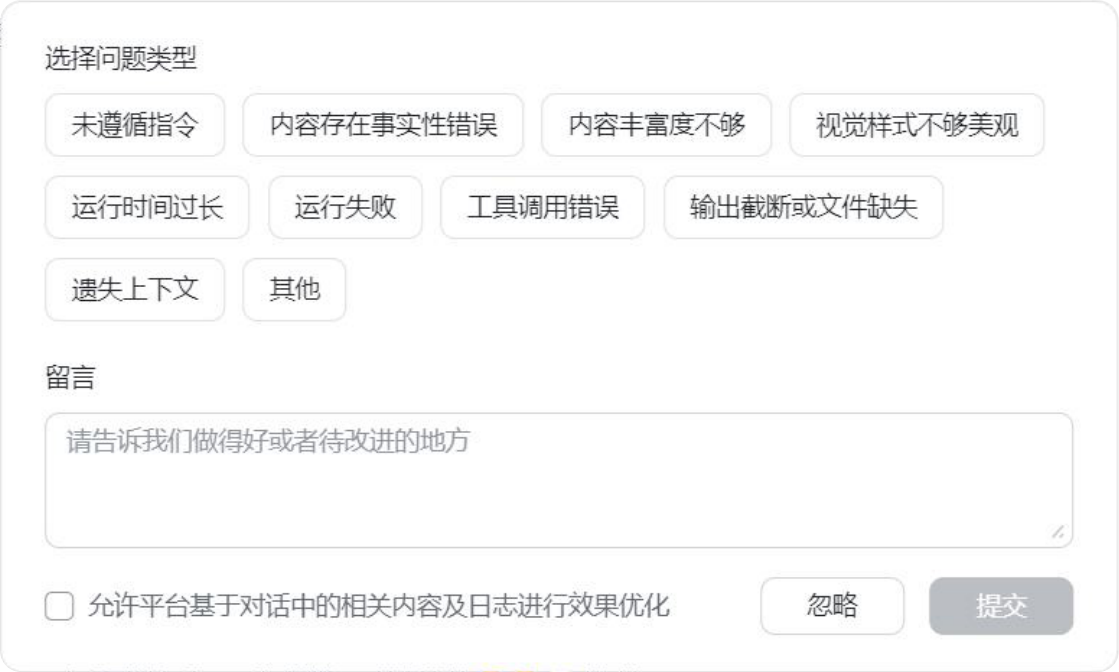
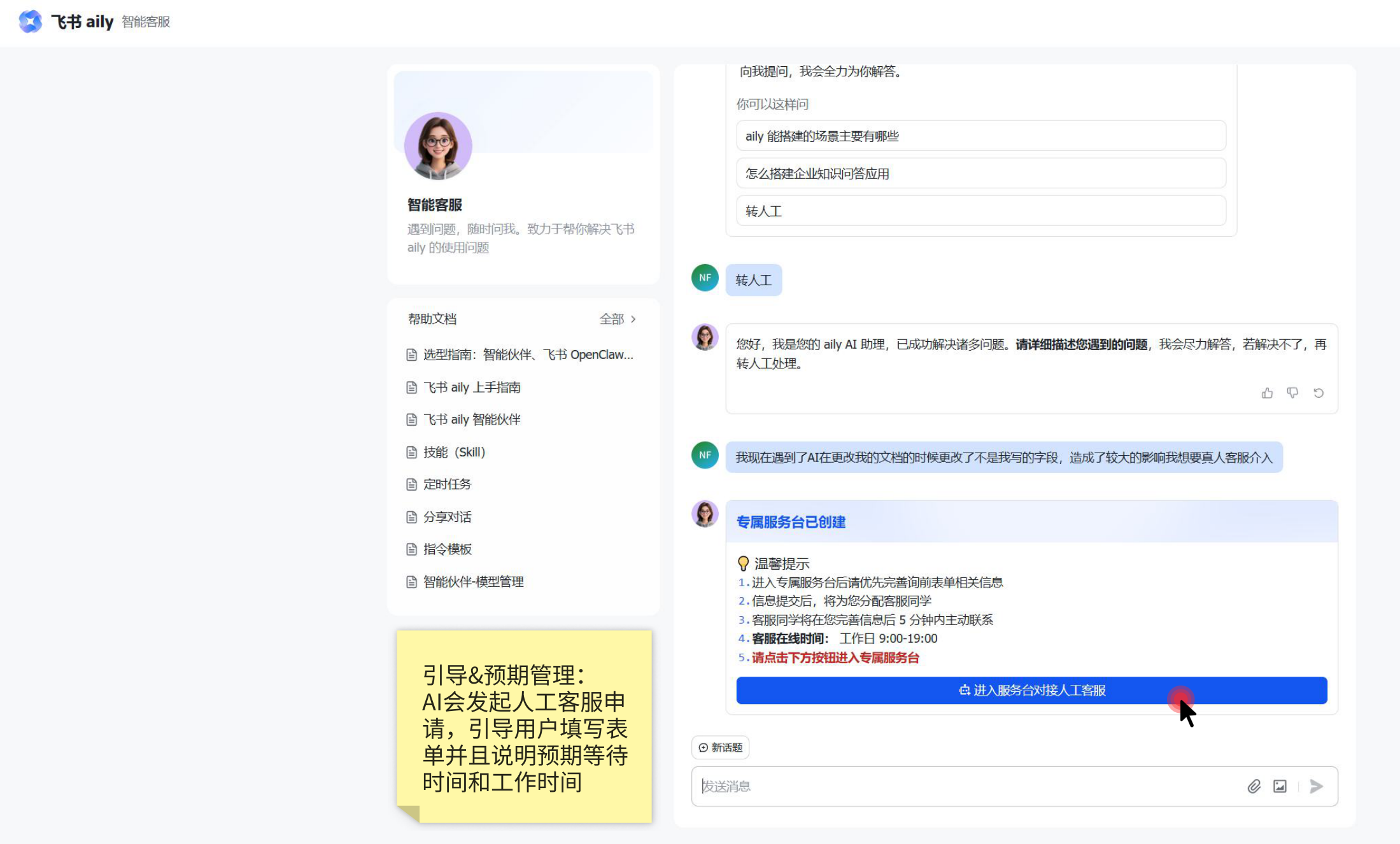
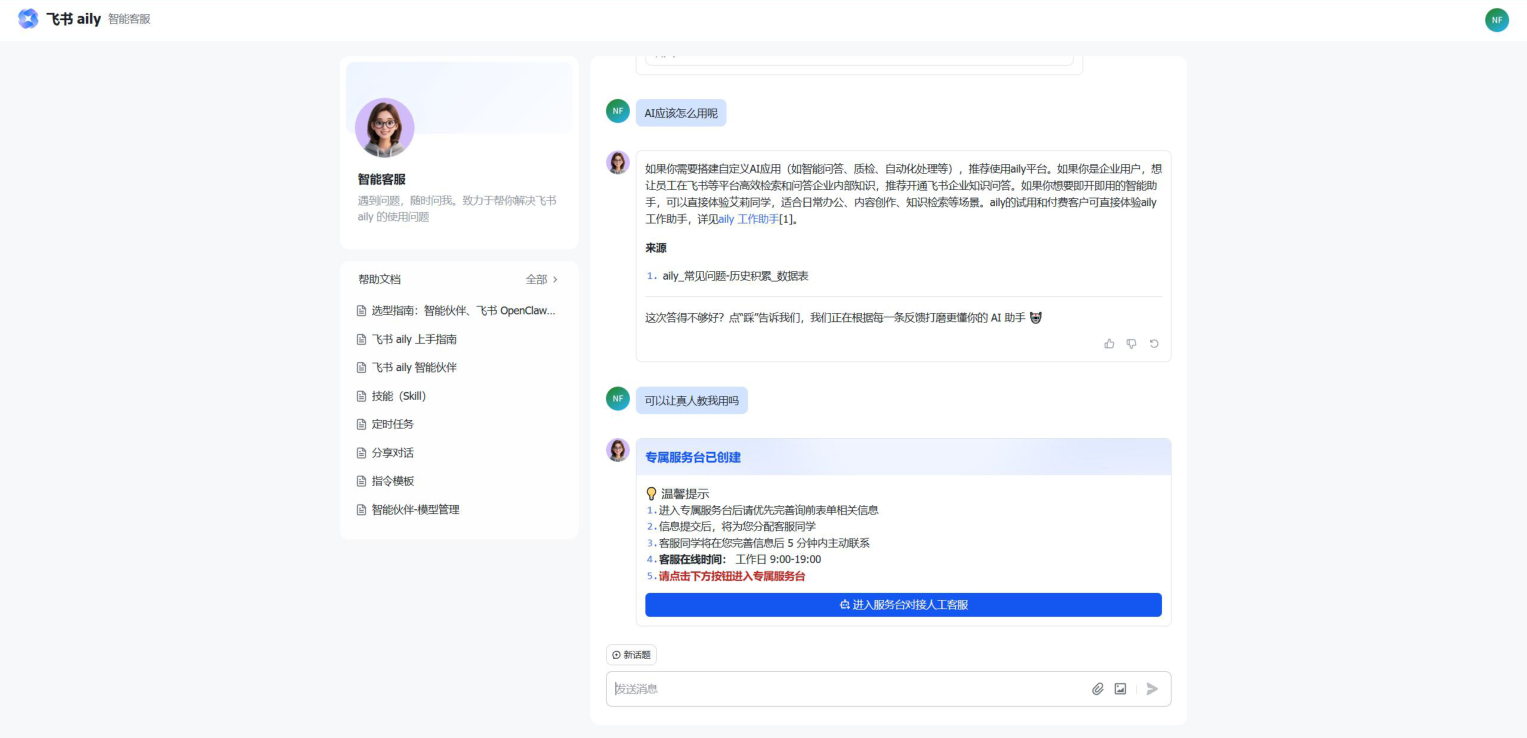
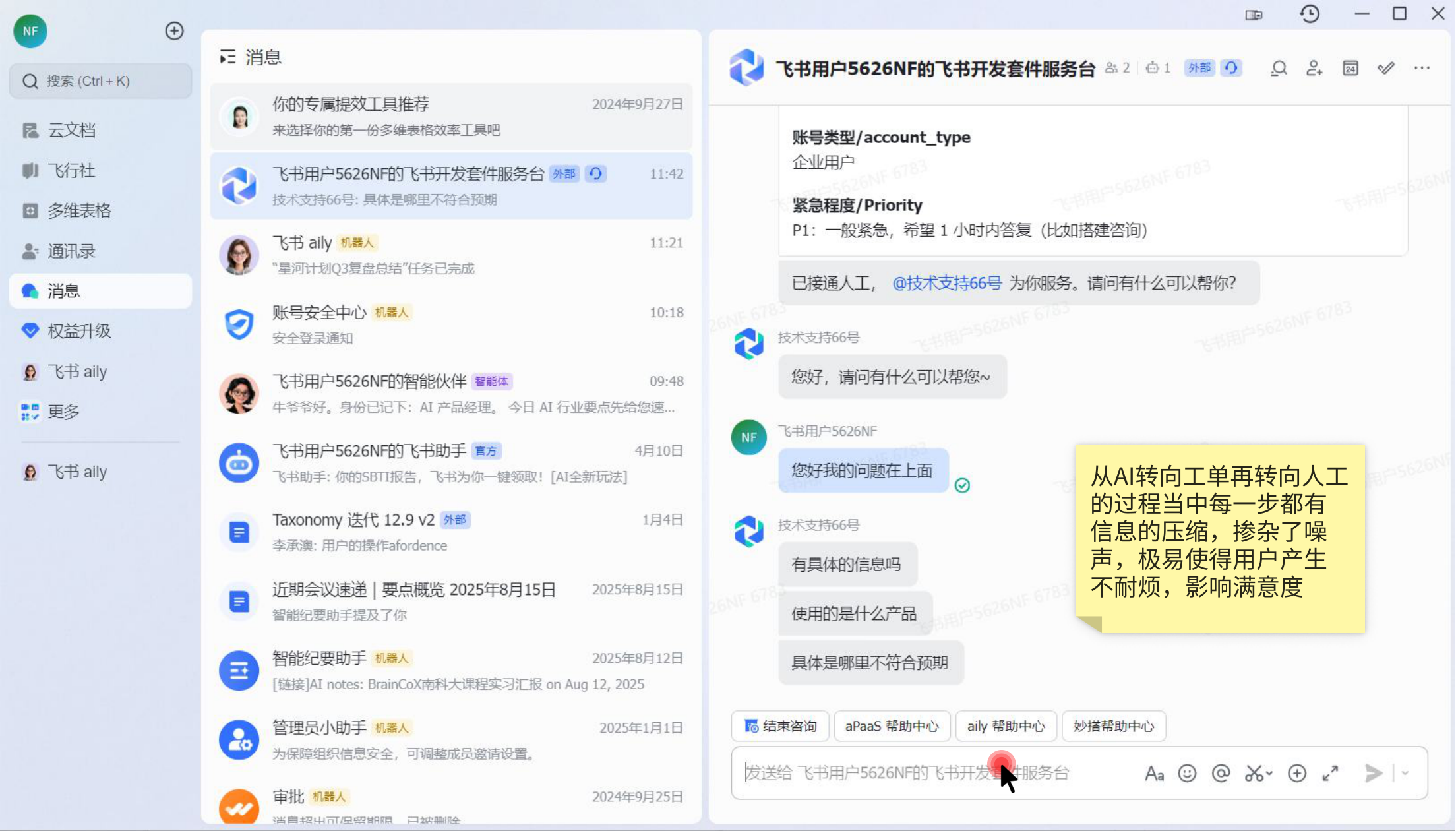
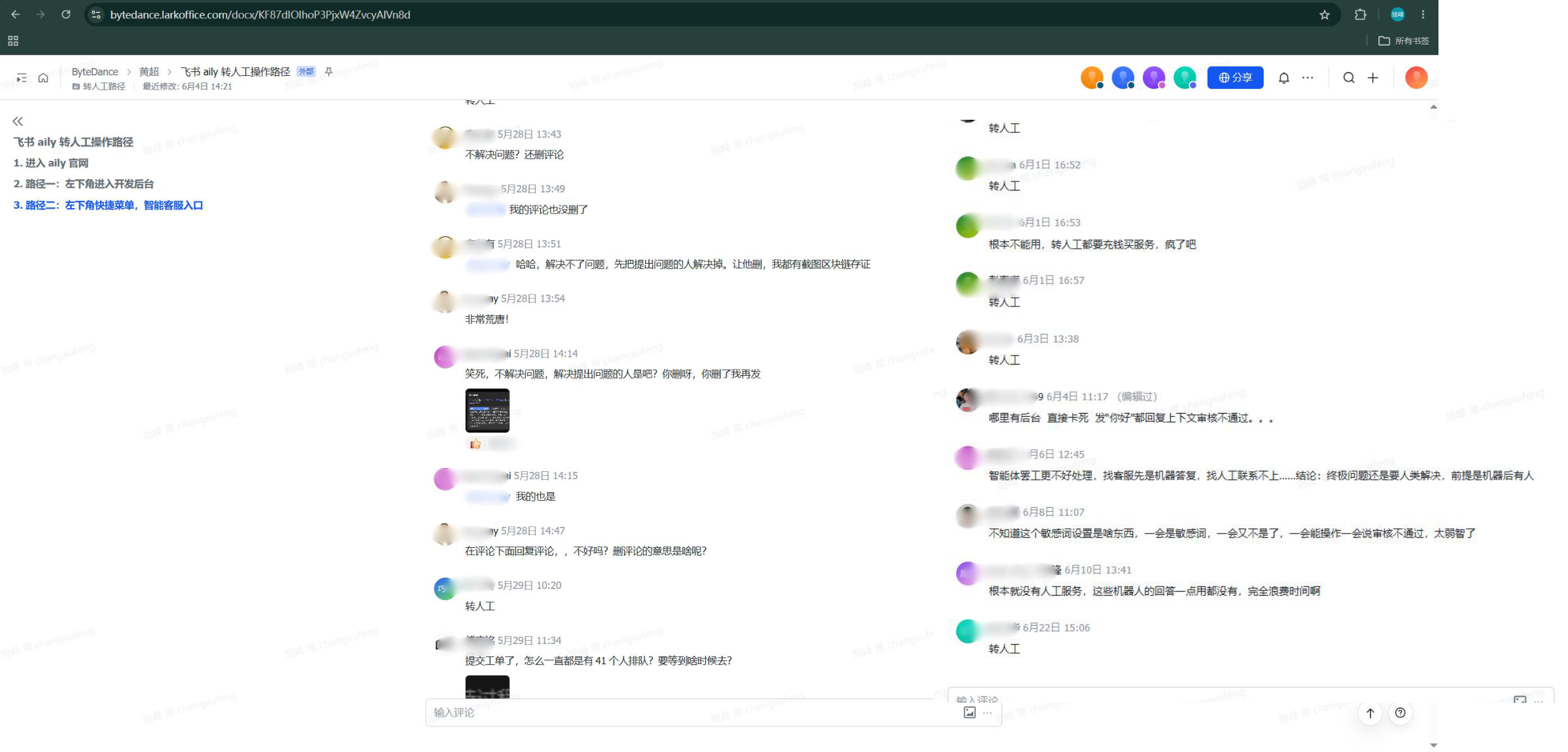
Human intervention should not be seen only as "customer-service fallback when AI cannot answer." When users express extreme statements, or when issues involve minors, elderly people, illegal activity, self-harm risks, or other high-risk scenarios, products should treat human intervention as a safety triage mechanism: AI first identifies risk, reduces misjudgment and spread, then hands the parts that require judgment, reassurance, or action to humans. This mechanism essentially adds compliance, responsibility, and emotional support boundaries beyond model capability.
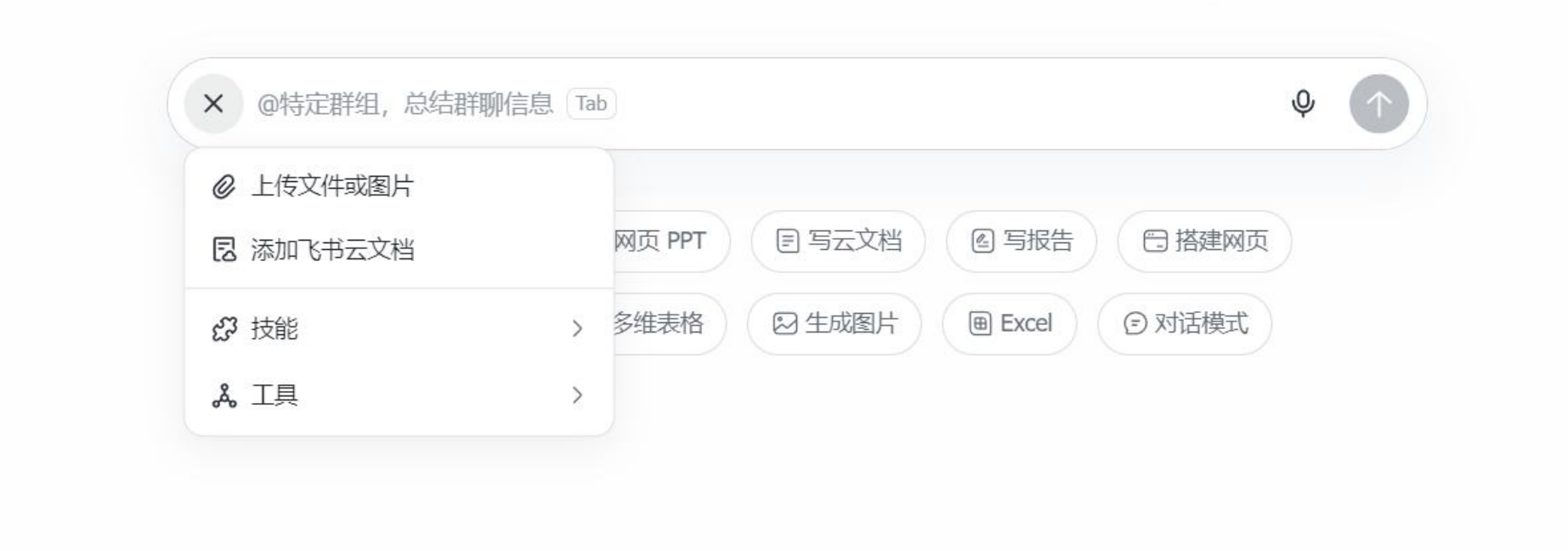
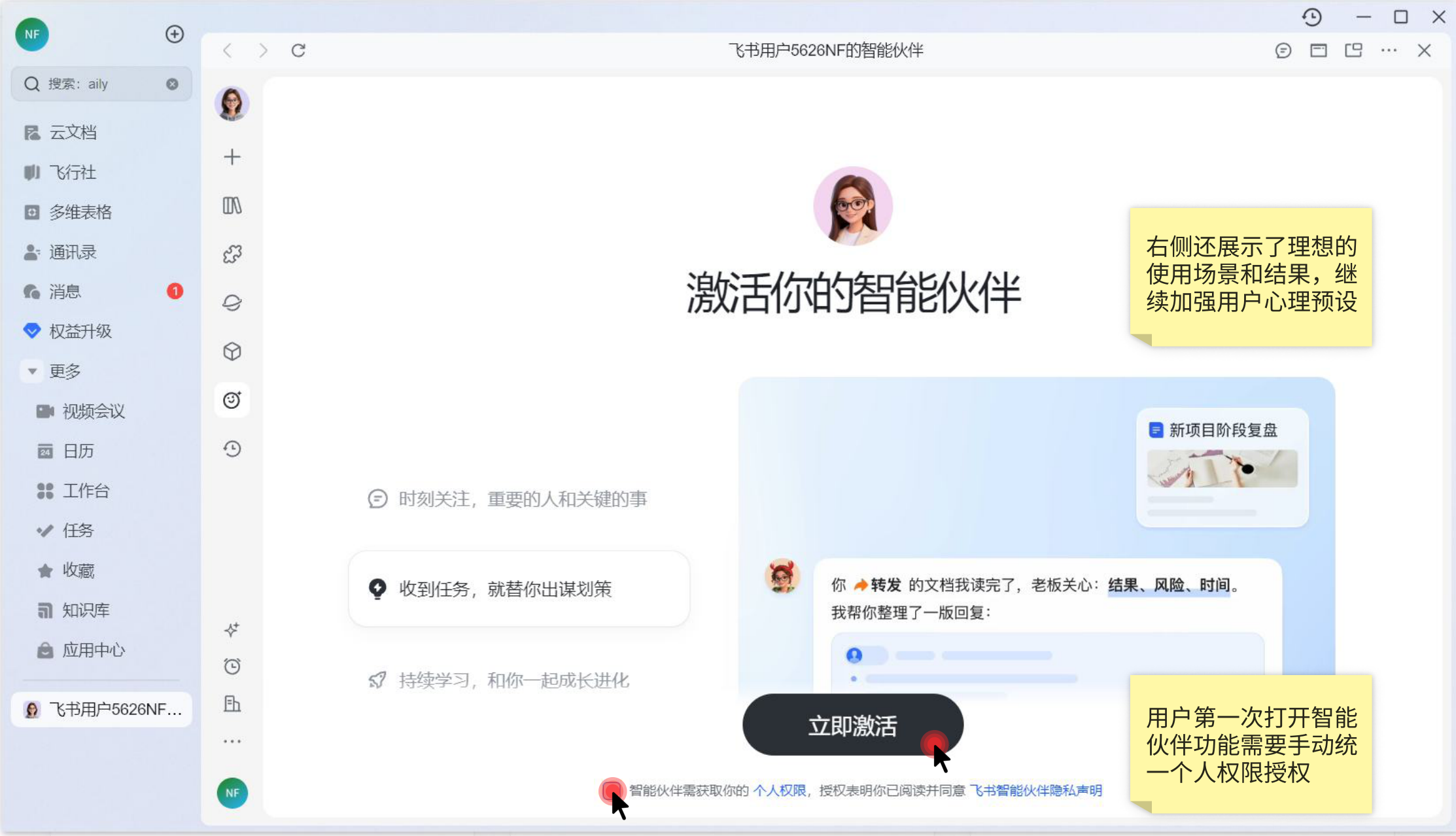
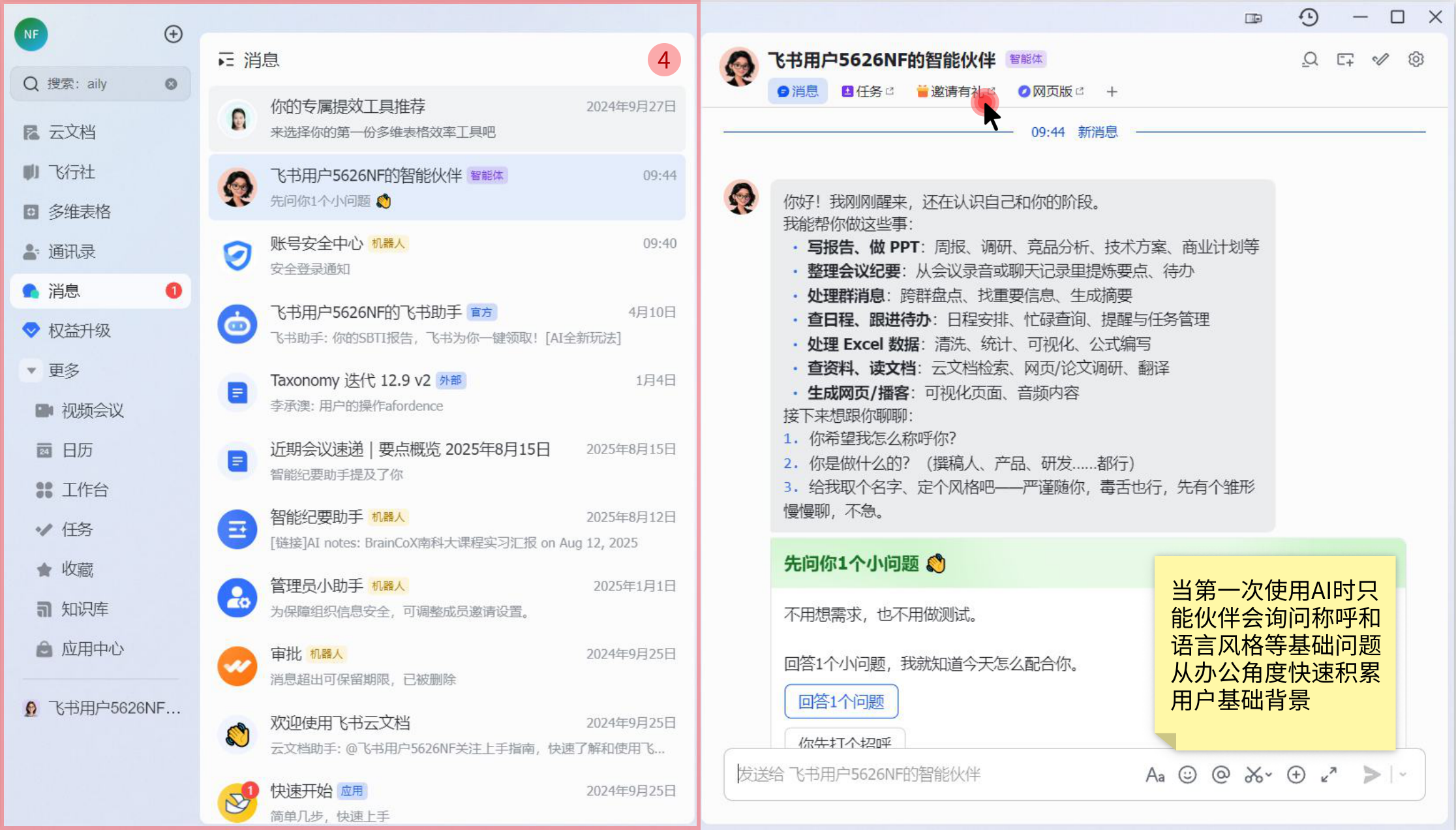
Therefore, I believe the current key to office AI is not just improving model capability. Product design must clearly define user control, permission boundaries, failure fallback, and trust mechanisms. Only when users know what AI can do, what it cannot do, how to recover when it is wrong, and when a human will take over, will enterprises be more likely to accept and pay for these products. This is also the core issue I focused on in this Feishu Aily teardown.
01
The core of office AI is not a chat entry, but a workflow entry
The real opportunity is to embed AI into documents, messages, spreadsheets, and collaboration chains, rather than asking users to open another chatbot.
02
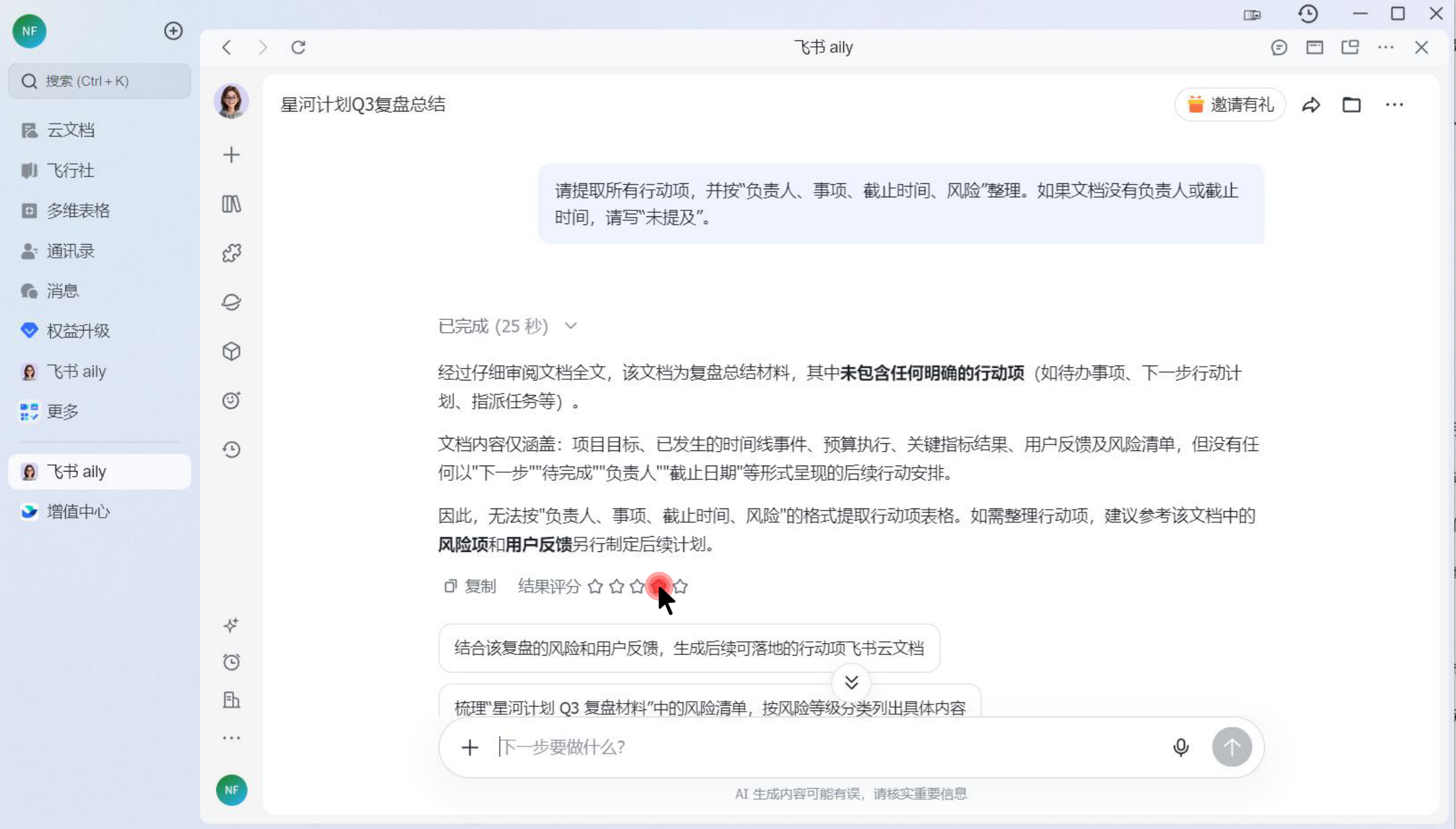
AI failure is inevitable; the key is preserving control after failure
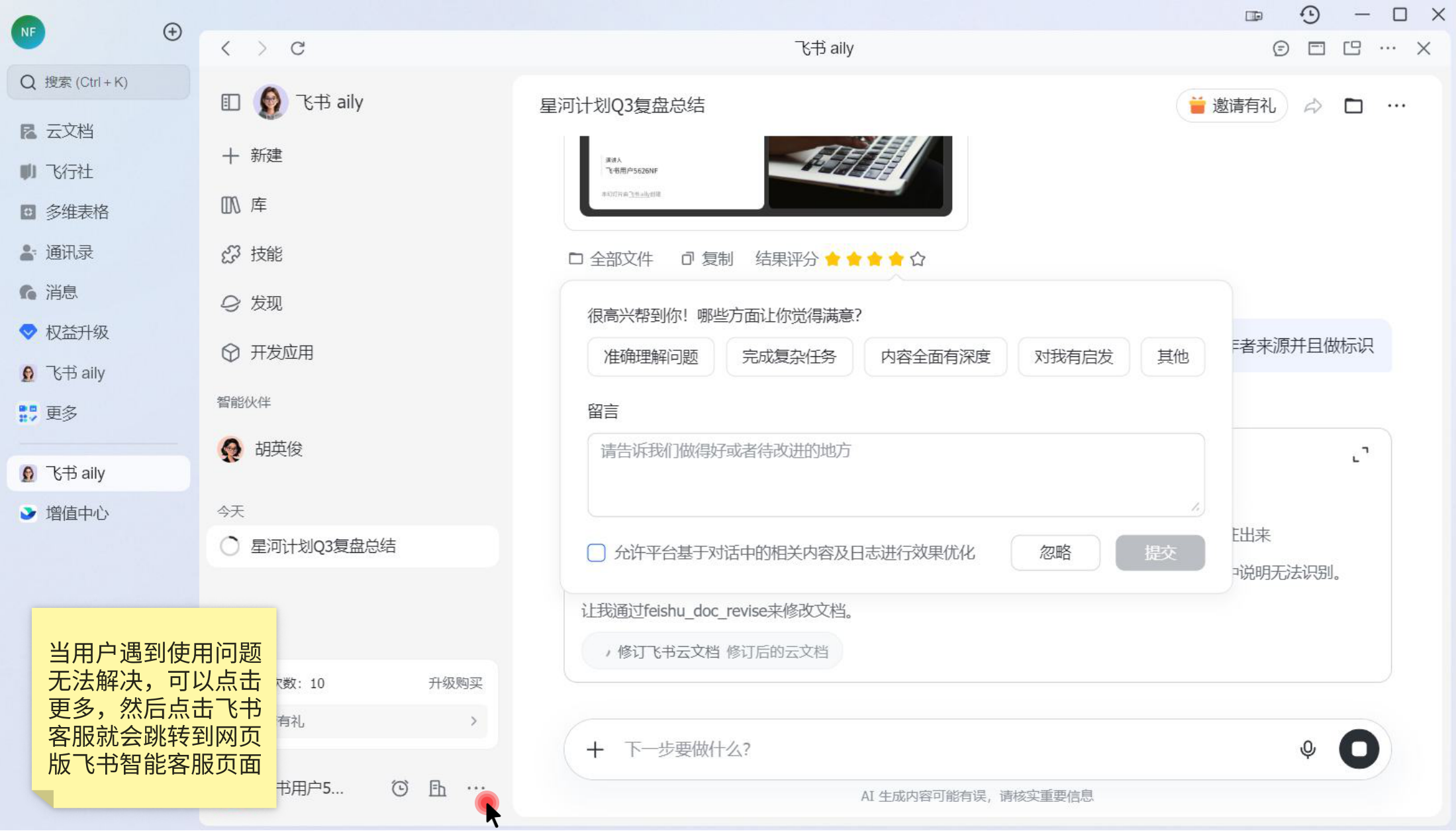
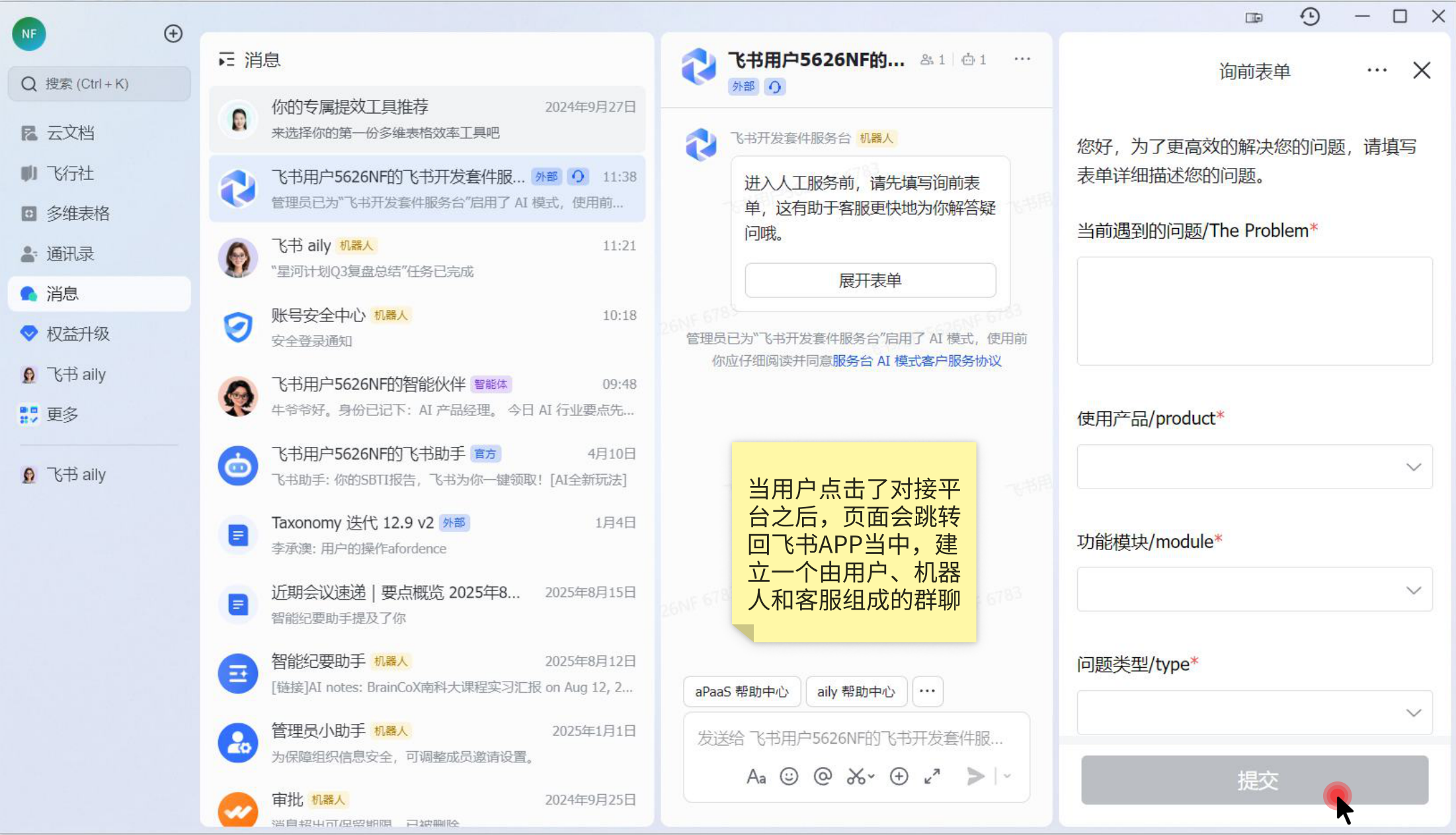
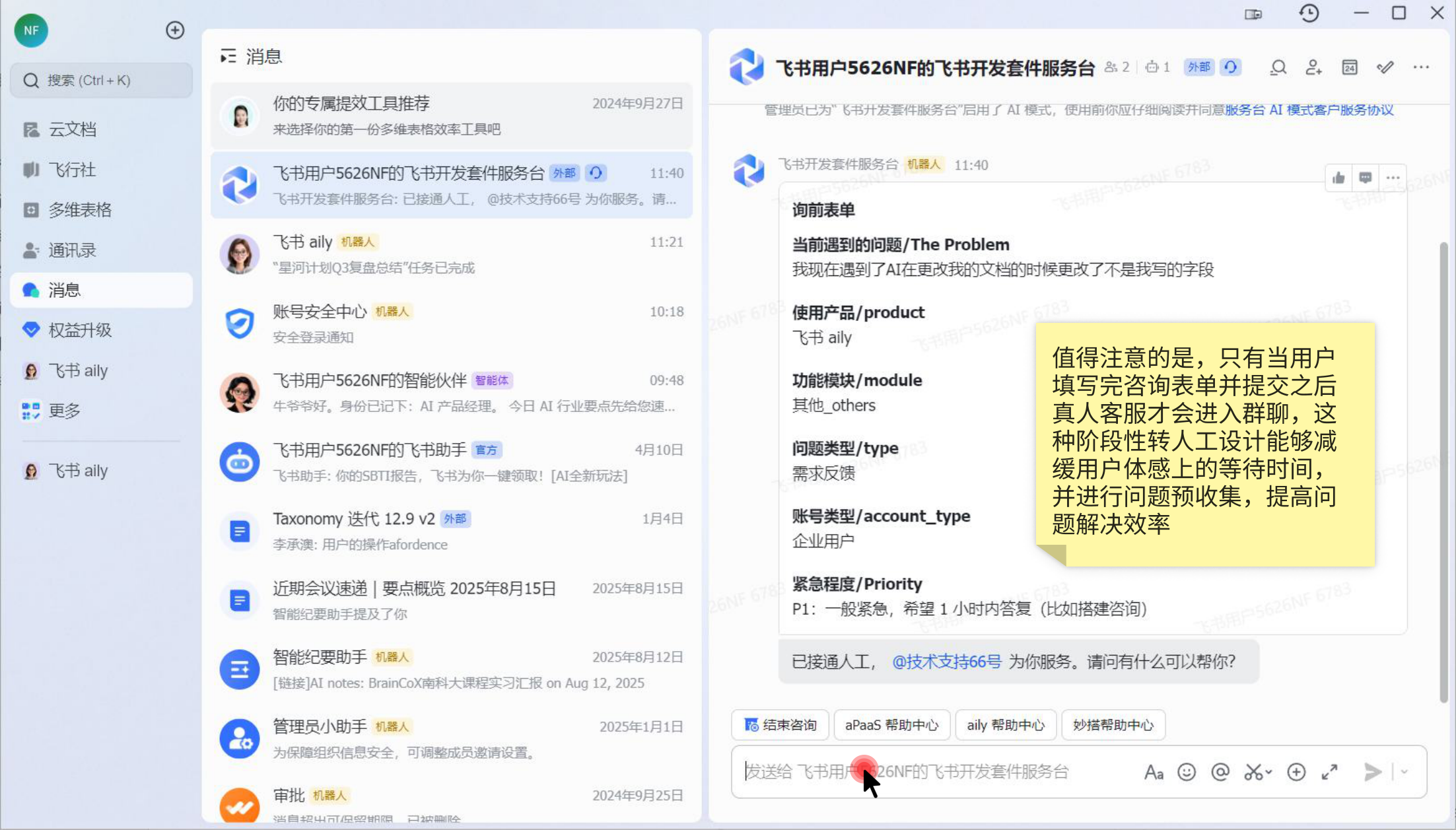
When model output is unreliable, the product should provide explanation, feedback, undo, human escalation, and context carryover so users know what they can do next.
03
Permissions, feedback, and human fallback are part of enterprise AI trust
Enterprise users care not only about efficiency, but also about whether data is used, who can see it, who is responsible for outcomes, and whether humans can intervene in high-risk situations.
04
Good Agent products design model capability, user expectations, and human boundaries together
Model capability determines the ceiling, user expectations determine acceptance, and human boundaries determine whether the experience can survive failure.